Why players use this
A better way to understand your own play than scattered score memories
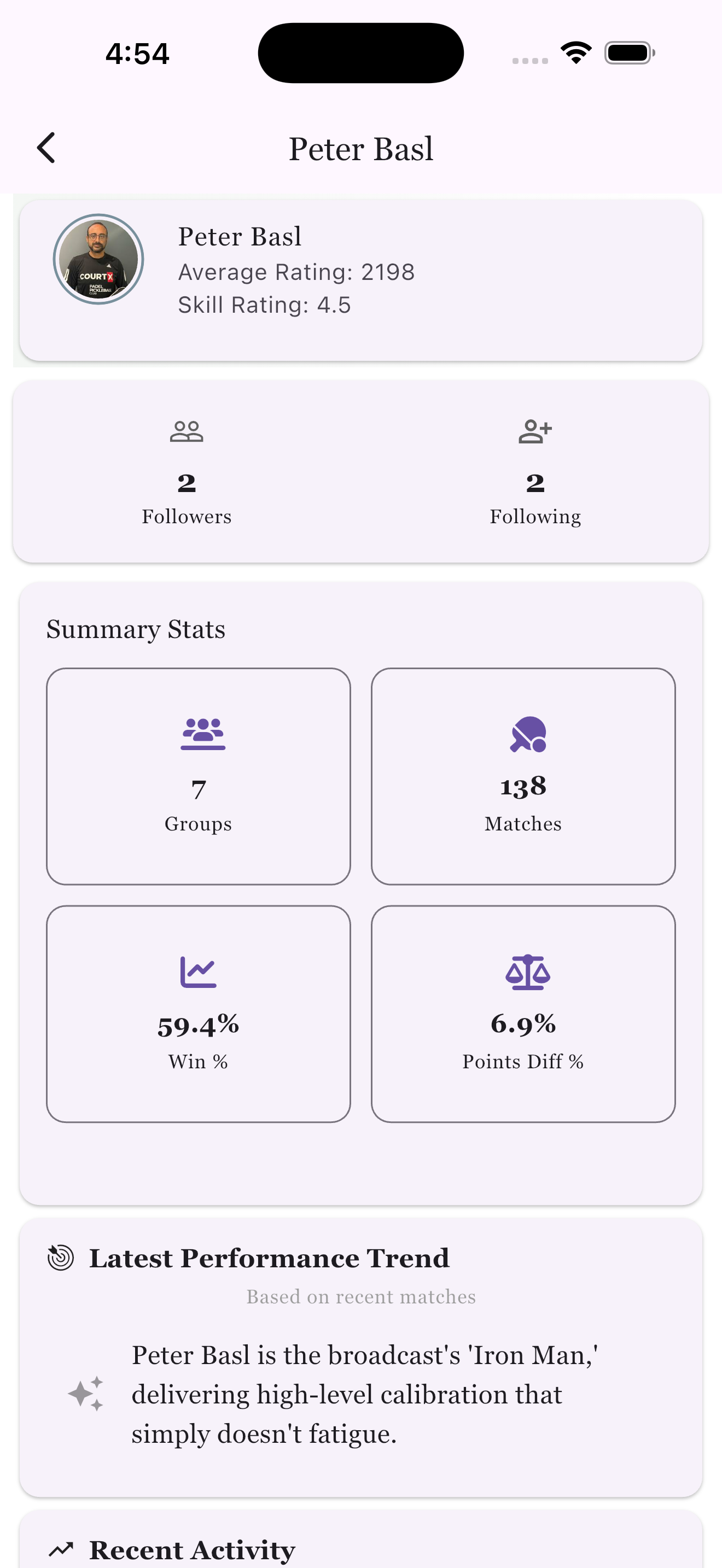
Visible progress: revisit results, see how your numbers are moving, and check whether your recent form is actually improving.
Social context: follow rivals, teammates, and familiar opponents so your profile sits inside the community instead of outside it.
Performance history: use the profile to reconnect rankings, results, and match history across the groups where you actually compete.
What the profile connects
Stats work better when they point back to actual play
- 1. Rankings and match count give context about how active and competitive your recent run has been.
- 2. Group participation helps explain why one stretch of results looks different from another.
- 3. Social follows make it easier to keep an eye on players you regularly face or partner with.
What this avoids
A profile page that looks polished but tells you nothing useful
Ladders is stronger when profiles help players understand form, history, and relationships inside the same communities where real matches happen.
Rankings
Climb the Ranks
See how player profiles connect to ratings, match count, and leaderboard movement.
AI
Social & AI Insights
Explore the broader narrative layer around rivalries, streaks, and standout results.
Player Overview
See the full player journey
Go back to the overview page for groups, live sessions, tournaments, and related player workflows.
Player CTA
Use your profile as the place where your results start to make sense
If you want more than a list of scores, Ladders gives you a profile connected to real groups, recurring play, and the people you actually compete with.