Why it matters
The benefit is not only speed. It is trust in the competitive record.
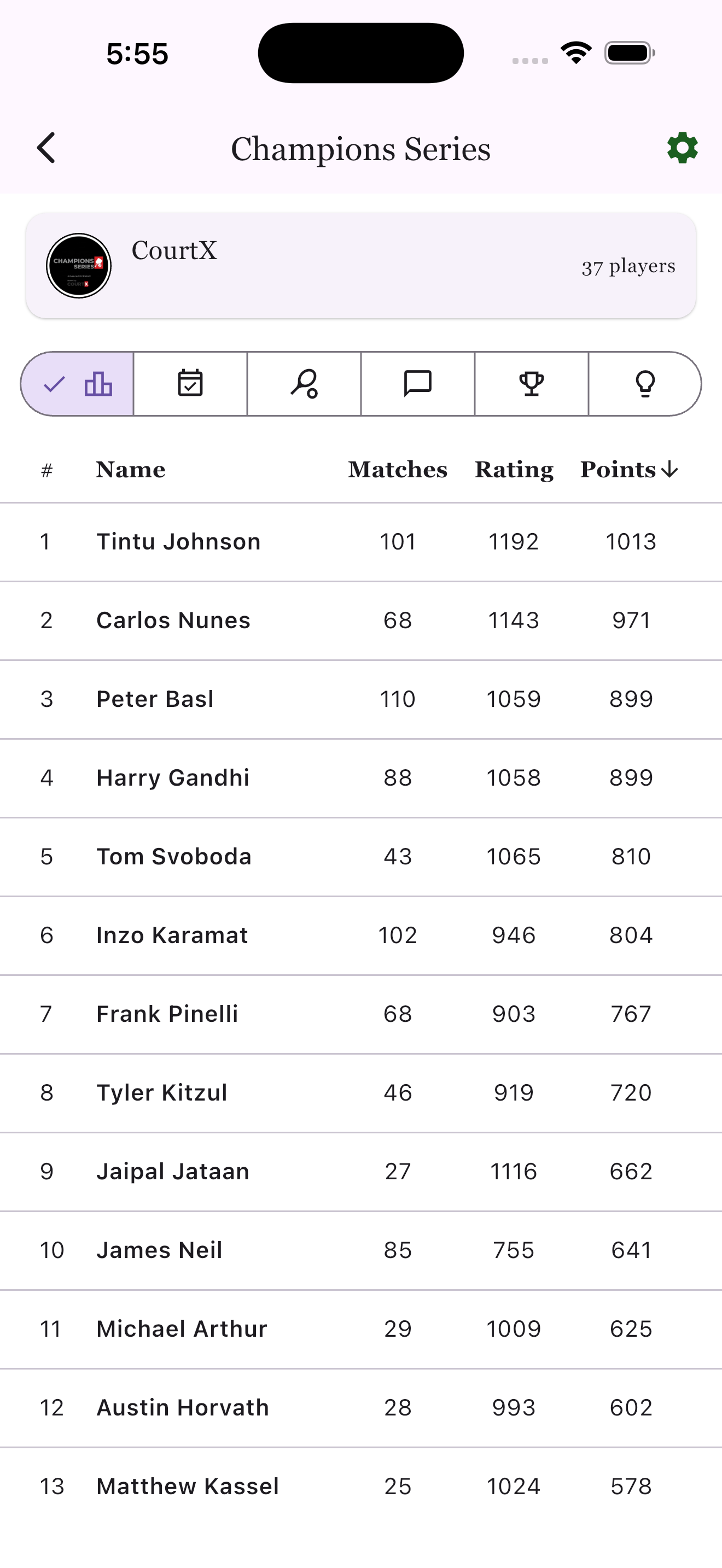
Fast score entry matters because it reduces the gap between what happened on court and what the standings say afterward. That is what makes leaderboards easier to accept and easier to explain.
On Court
Results can be recorded close to the action
Managers do not need to reconstruct scores later from memory, screenshots, or scattered notes.
For Groups
Standings move from actual recorded outcomes
That makes group leaderboards easier to trust and easier to explain when rankings shift.
For Players
Feedback stays connected to the match that created it
Players can see why one result mattered because scoring, standings, and profile context stay connected.
How it works
Scoring stays aligned with the event format you are actually running
- 1. Managers or players can enter scores directly from the live event flow.
- 2. Session structure stays tied to formats such as king of the court, round robin, random, manual, or fixed pairings.
- 3. Deterministic ELO updates keep the ranking model grounded in recorded outcomes.
What this replaces
- 1. End-of-day score reconstruction from text threads or screenshots.
- 2. Manual leaderboard cleanup after the event is already over.
- 3. Ranking disputes caused by delayed or inconsistent result entry.
Where to go next
Scoring is one layer in a larger competitive workflow
If you want to see the ranking impact, player experience, or live session operations around scoring, these are the right follow-up pages.
Rankings
Player Ratings and Leaderboards
See how score entry translates into visible ranking movement for players and groups.
Players
Player Overview
Follow the full player journey from joining a group to reviewing results and recaps later.
Operations
Session Operations Guide
Review the live workflow for formats, rounds, courts, and how score locking fits into the event.